

Vintage and Antique Wind Up Toys are more than just nostalgic playthings—they are windows into the craftsmanship, imagination, and mechanical ingenuity of past generations. For collectors and enthusiasts, these toys aren’t simply curiosities; they are tangible connections to history, artistry, and even childhood wonder. Yet, knowing whether a piece is truly authentic can be a challenge, especially with the flood of reproductions and reissues available in today’s market.
The value of collecting Vintage and Antique Wind Up Toys comes not only from the toy itself but also from the story it tells. An original tin car with faded lithography or a clockwork animal that still trots after decades holds an authenticity that a modern reproduction cannot replicate. For this reason, learning how to identify genuine examples is essential. A true collector needs the ability to separate authentic finds from imitations, just as a jeweler distinguishes a diamond from glass.
At Uncle Al’s Toys, our passion lies in curating and preserving these treasures. From rare wind up toys that surface once in a generation to classic wind up toys that defined entire eras of play, our mission is to guide collectors toward trustworthy pieces and provide support with restoration, parts, and preservation. Before you dive into the world of collecting, it’s important to understand the markers that define authenticity.
Vintage and Antique Wind Up Toys: Key Authenticity Markers
When evaluating Vintage and Antique Wind Up Toys, certain markers immediately separate originals from imitations. These clues are found in the materials, construction methods, mechanical workings, and even the natural aging of the toy. Understanding these details not only ensures authenticity but also helps preserve value for future generations.
Materials and Build Quality
The first clue in identifying Vintage and Antique Wind Up Toys lies in what the toy is made of. Early wind-up pieces were typically constructed from tin lithography or pressed steel, while some mid-century examples introduced early plastics. Originals often display small imperfections from hand-stamping and lithograph printing, a trait absent in today’s machine-perfect reproductions. Tabs, not screws, usually hold authentic tin toys together. Spotting Phillips screws, which didn’t become common until later decades, is a sure sign you are looking at a reproduction rather than a period-correct piece.
Keys and Wind-Up Mechanisms
The winding key itself tells part of the story. Many original toys have fixed, integrated keys, while others feature detachable flat or barrel-shaped keys specific to the manufacturer. Modern replicas may use generic replacements or poorly fitting substitutes. Inside, the mainspring, gears, and governor reveal authenticity. True period mechanisms produce a distinct rhythm in motion, often slightly uneven due to age and wear. In contrast, reissues tend to run too smoothly, betraying their modern manufacture.
Maker’s Marks and Origin Stamps
Authentic Vintage and Antique Wind Up Toys often carry the name or initials of their maker. German, French, and Japanese manufacturers typically stamped logos or country of origin into the tin itself, often on the underside or near a seam. Some even included model numbers. A missing or crudely faked stamp should immediately raise suspicion. Knowing where to look for these marks can mean the difference between acquiring a genuine collectible and being misled by a reproduction.
Signs of Honest Age and Use
Finally, true vintage pieces show signs of time that cannot easily be replicated. Natural patina, minor paint loss, oxidation on the tin, and gentle wear on winding keys tell of decades of use and storage. Artificially aged toys, by contrast, often show unnatural paint wear, chemical rusting, or too-uniform scuffing. Even the packaging, when present, offers clues—authentic period boxes may show yellowing, brittleness, or vintage printing techniques.
Together, these markers create a roadmap for authentication. While no single detail alone determines authenticity, the combination of materials, mechanics, markings, and aging provides the surest way to separate genuine Vintage and Antique Wind Up Toys from replicas. For collectors of rare wind up toys, developing an eye for these cues is what protects both passion and investment.
Dating Your Find: From Early European Tin to Mid-Century Classic Wind Ups
One of the most exciting aspects of collecting Vintage and Antique Wind Up Toys is learning to identify their era. Each decade brought unique design cues, materials, and cultural influences that help collectors pinpoint when a toy was made. Dating your piece not only confirms authenticity but also reveals its place in the broader story of toy history.
Early European Tin Creations: 1900s–1930s
At the start of the 20th century, European makers were at the forefront of mechanical toy innovation. Their Vintage and Antique Wind Up Toys often featured elaborate lithographed tin surfaces with bright yet slightly muted inks. The craftsmanship leaned toward realism, with cars, trains, and animals carefully decorated to reflect real-world details. These pieces are among the most sought-after rare wind up toys today because many survived only in limited numbers. Their delicate construction and natural wear make original examples precious finds for serious collectors.
The Wartime and Postwar Era: 1940s–1950s
The 1940s brought changes in materials and style. With metals scarce during the war, production slowed, and when toy making resumed, manufacturers experimented with lighter tin and, later, plastics. The postwar boom reignited the popularity of wind-up toys, especially in Japan, where companies produced both affordable novelties and high-quality collectibles. Many of the classic wind up toys associated with space exploration, futuristic robots, and vehicles come from this period. Their lively lithography, sometimes with metallic effects, gives them a distinct mid-century character.
The Space Age and Mid-Century Innovations: 1960s
By the 1960s, Vintage and Antique Wind Up Toys reflected the optimism of the Space Age. Astronaut figures, rocket cars, and space-themed rides became central themes. Plastics grew more common, but many toys still relied on traditional tin lithography for surface decoration. While these toys were mass-produced, certain variants and boxed editions are now considered rare wind up toys because fewer examples survived intact. The shift in style, color, and subject matter makes the 1960s an essential chapter in dating vintage finds.
Packaging and Ephemera as Clues
Beyond the toy itself, original packaging plays an important role in dating. Boxes from the early 1900s often used thick cardboard with simple litho printing, while mid-century boxes introduced brighter inks, playful fonts, and more dynamic graphics. Even instruction sheets or advertising inserts can narrow down the decade of production, giving collectors a more complete picture of authenticity.
Originals vs. Reissues: Spotting the Differences at a Glance
As demand for Vintage and Antique Wind Up Toys has grown, so too has the market for reproductions. While many modern reissues are charming in their own right, they lack the historical and collector value of originals. Knowing how to distinguish between the two ensures that collectors invest wisely and preserve the integrity of their collections.
Common Reproduction Tells
One of the first signs of a reproduction compared with true Vintage and Antique Wind Up Toys lies in the hardware. Originals were typically assembled using folded tin tabs, while modern reproductions often rely on Phillips screws, which were not widely used in toy manufacturing until later decades. Paint and lithography also tell a story—authentic pieces have slightly muted colors that age with a natural patina, while reissues often use brighter, glossier finishes. Even the weight of the toy can be a clue, as modern materials tend to be lighter.
Mechanical Differences in Motion
When wound, an authentic piece produces movement that is slightly uneven, reflecting both its period engineering and the wear of decades. Reproductions, however, often move with uncanny smoothness due to their new parts. Collectors who spend time observing the rhythm of original mechanisms quickly learn to spot this difference, which is especially important when evaluating rare wind up toys where authenticity directly impacts value.
Packaging and Modern Markings
Reissued Vintage and Antique Wind Up Toys frequently come with newly printed boxes, sometimes designed to mimic originals. However, these boxes usually carry barcodes, modern safety warnings, or company marks that were never present in true vintage packaging. Collectors should also pay close attention to country-of-origin labels—reproductions may display modern print styles or wording that differs subtly from authentic mid-century markings.
Why Reissues Still Have a Place
Although they lack the collector’s value of authentic Vintage and Antique Wind Up Toys, reissues have their own appeal. They allow newer collectors to enjoy the look and feel of historical toys without the higher cost of originals. They also serve as useful comparison pieces for learning how to spot differences. However, for those seeking the thrill of owning genuine history, only originals hold the aura and rarity that define true collecting.
Rarity, Value, and Red Flags for Fakes
Collectors know that not all Vintage and Antique Wind Up Toys are created equal. Some pieces were mass-produced and still surface frequently, while others are so scarce that only a handful remain today. Understanding what makes a toy rare, how to evaluate its value, and how to avoid clever fakes is essential for any collector who wants to build a lasting collection.
What Makes a Toy Truly Rare
Rarity is not just about age. A toy may be old, but if millions were made and many survived, it will not hold the same value as one produced in limited runs. Toys from smaller European makers, regional variations, or special editions tend to be categorized as rare wind up toys because fewer examples exist. Color variations also play a role; sometimes a specific lithograph colorway was produced in short supply, making it more desirable than the standard version.
Condition and Completeness
Even among rare finds, condition separates good pieces from great ones. A toy that retains its original litho shine, intact key, and working mechanism will always command a higher value than one with heavy rust or broken gears. Original packaging increases the worth considerably, as boxes were often discarded and are far less common than the toys themselves. Collectors prize boxed examples of Vintage and Antique Wind Up Toys because they capture the full history of the item.
Recognizing Red Flags for Fakes
Fakes and reproductions often target collectors of high-value toys. One red flag is artificially aged metal, where rust or patina looks too uniform or chemically induced. Fonts on lithography may also appear slightly off, betraying the modern hand that created them. Reproductions sometimes feature fantasy variations that never existed historically—an unusual color or design that seems too good to be true is usually exactly that. The surest safeguard is developing an eye for detail and comparing potential purchases to verified originals.
Market Value and Collector Demand
The value of Vintage and Antique Wind Up Toys fluctuates with collector demand. High-quality examples from makers like Lehmann, Strauss, and CIJ often fetch premium prices, especially when they still operate smoothly. Rarity, condition, and provenance all combine to determine market worth. For collectors, understanding these factors helps prevent overpaying for common items while identifying true opportunities when rare wind up toys appear for sale.
Condition Grading & Safe Testing for Classic Wind Up Toys
Owning Vintage and Antique Wind Up Toys is only part of the joy of collecting. Preserving them in safe condition and knowing how to test them properly ensures that they can be enjoyed for years to come without risk of damage. A careful approach to grading and testing is what separates responsible collectors from casual owners.
Grading Condition Accurately
Condition grading allows collectors to communicate value consistently when evaluating Vintage and Antique Wind Up Toys. A toy in mint condition shows no signs of play or wear, while excellent examples may have only minimal paint loss or slight aging. Very good toys retain functionality but may display moderate wear, while fair or poor examples show heavy rust, missing parts, or non-working mechanisms. Proper grading is critical when buying or selling classic wind up toys, as it protects both parties and sets realistic expectations.
Read Also: How to Clean Baby’s Toys – Stuffed, Battery Operated, Remote Control, & More
Safe Testing Practices
When winding a toy for the first time, restraint is key. Many vintage mechanisms are fragile, and overwinding can snap a mainspring instantly. It is best to test a toy slowly, using only a few turns of the key to observe its motion. If resistance feels abnormal, forcing it will likely cause permanent damage. Collectors should also test on a soft surface to protect both the toy and the surface it runs on.
Light Maintenance vs. Restoration
Some wear is part of the charm of Vintage and Antique Wind Up Toys, and many collectors prefer to leave them as found. Light maintenance, such as gentle dusting or applying a small amount of lubrication to gears, can keep toys running without compromising originality. Restoration, on the other hand, should be reserved for cases where parts are broken or missing. Professional services can provide period-correct repairs, ensuring that value is preserved rather than diminished.
Long-Term Storage and Preservation
How a toy is stored has a direct impact on its longevity. Dry, climate-controlled environments are essential to prevent rust and deterioration. Direct sunlight should be avoided, as it fades lithography and weakens materials over time. Using archival-quality boxes or display cases helps shield toys from dust and accidental damage. With proper care, classic wind up toys remain both functional and collectible for future generations.
Live Examples from Our Shelves
Understanding theory is one thing, but seeing real examples of Vintage and Antique Wind Up Toys brings the concepts of authenticity, rarity, and condition to life. At Uncle Al’s Toys, we curate both originals and carefully identified reissues, giving collectors a reliable source for comparison. The following highlights showcase key items that demonstrate authenticity markers, collector value, and the charm of mechanical design.
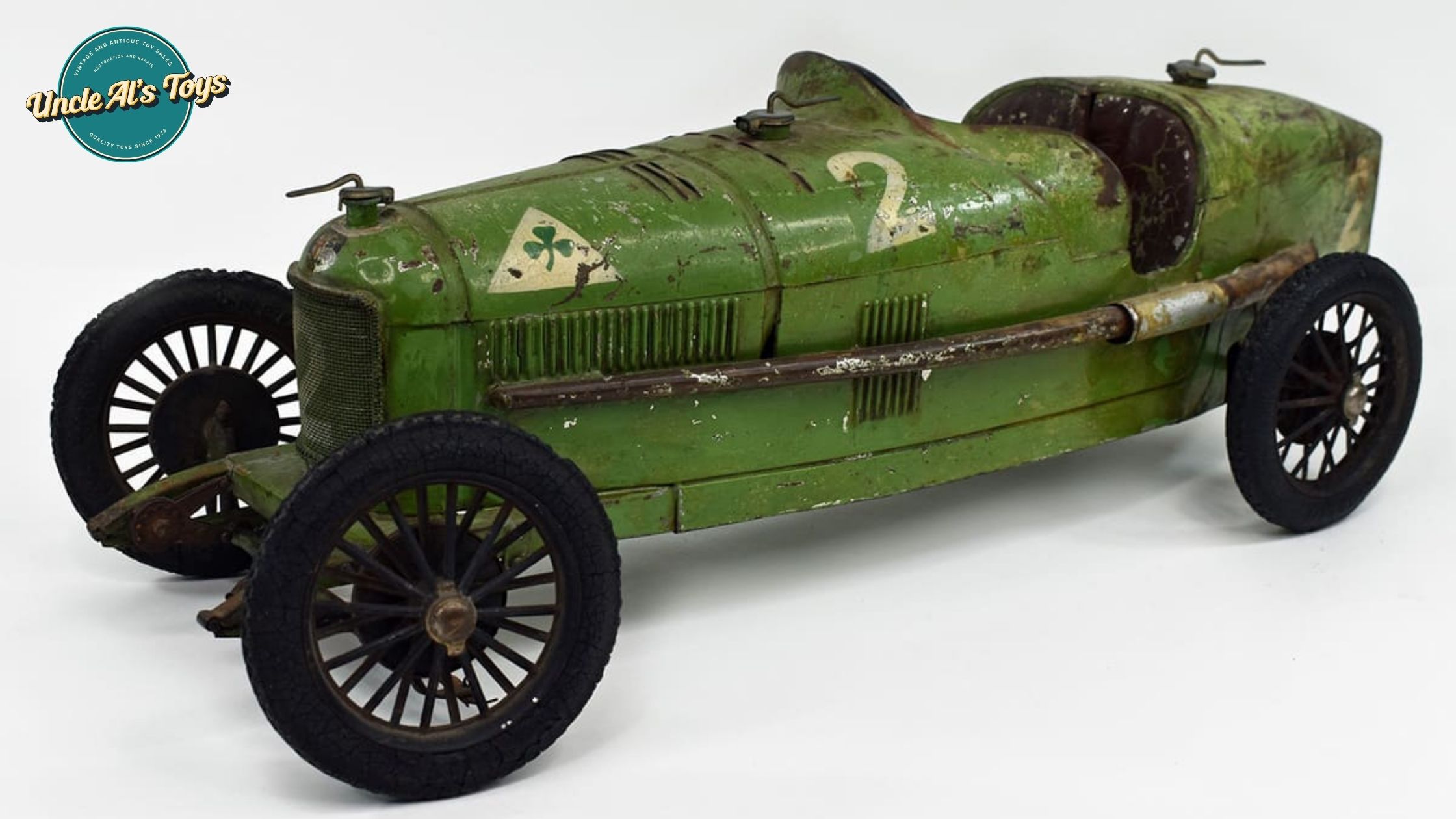
CIJ France Alfa Romeo P2 Race Car
The Alfa Romeo P2 race car models, available in both red and green, represent the height of European craftsmanship. These are classic examples of rare wind up toys, built with precision tin lithography and powered by durable clockwork mechanisms. Collectors prize them not only for their visual appeal but also for their smooth running action, which reflects the engineering excellence of French toy makers in the interwar years. Their paint wear and litho detailing show the natural patina expected of genuine originals.
Strauss Tin Litho Inter-State Bus
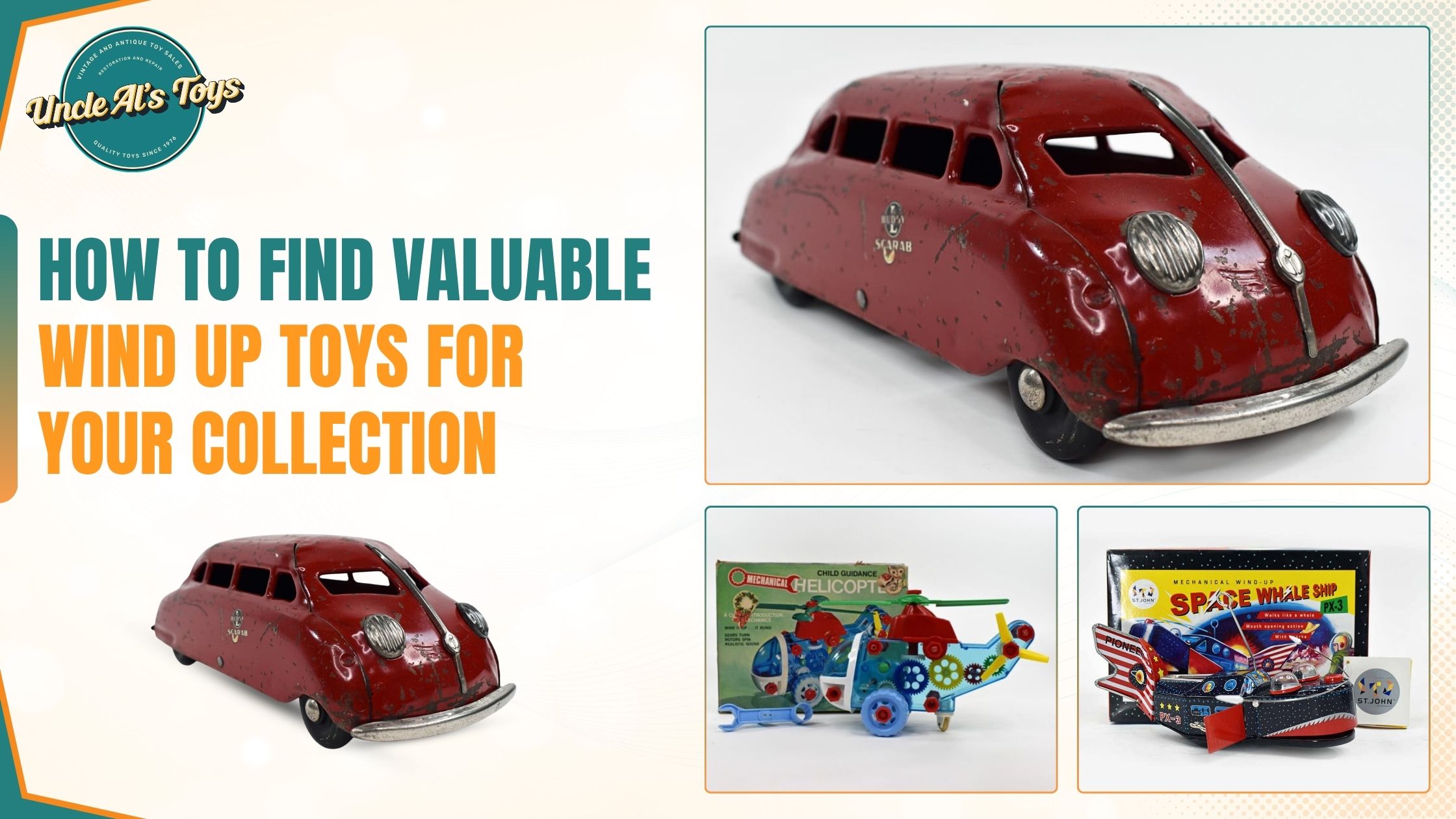
This 1930s American bus captures the energy of long-distance travel during the golden age of highways. Its integrated key, authentic lithography, and tabbed construction reveal it as an original piece rather than a reproduction. While reproductions may copy the shape, they often miss the muted tones and detailed artwork present here. For collectors of Vintage and Antique Wind Up Toys, transportation themes like this bus remain central to building a historically balanced collection.
Jenny the Balking Mule by Strauss
Humorous action toys such as Jenny the Balking Mule were staples of early American mechanical toy design. When wound, Jenny bucks and resists pulling, a playful mechanism that modern replicas rarely duplicate accurately. Original versions of Vintage and Antique Wind Up Toys like this are increasingly difficult to find, making them highly desirable rare wind up toys for those focused on character-based pieces. Their charm lies in both the mechanical action and the nostalgic story they tell.
Greppert & Kelch Tin Litho Car #548
This German-made tin car illustrates the precision of European design. The toy carries the G.&K. maker’s mark, a critical authenticity marker. Its litho patterns and functional winding mechanism remain intact, offering collectors a direct link to Germany’s influential toy industry. The survival of this piece in working condition elevates its status as a valuable collectible within the world of classic wind up toys.
Irwin Toys Spaceman
Mid-century toys reflected the optimism of the Space Age, and the Irwin Toys Spaceman stands as a striking example. Made from early plastics, it combines a wind-up mechanism with futuristic styling. While reproductions exist, original pieces display period-correct materials and wear. Collectors of Vintage and Antique Wind Up Toys often seek out space-themed models, as they symbolize a distinct cultural shift during the 1950s and 1960s.
Buffalo Toys Hy-Lo Ferris Wheel
This Ferris wheel from the 1920s demonstrates the creativity of American toy makers. Its unique spring-and-rod drive sets it apart from more common key-wind mechanisms. The vibrant lithography, softened by age, and the structural integrity of its tin frame provide strong indicators of authenticity. For enthusiasts, this piece represents the artistry of Vintage and Antique Wind Up Toys, making it a standout among classic wind up toys.
Child Guidance Mechanical Robot No. 8260
Robots became symbols of mid-century fascination with science and technology. The Child Guidance Mechanical Robot is constructed from durable plastic and showcases educational features that appealed to parents and children alike. While less elaborate than European tin examples, it remains significant as part of America’s contribution to toy innovation. For collectors, this robot highlights how the definition of wind-up extended beyond vehicles and animals into futuristic themes.
Modern Reissues Inspired by Classics
Uncle Al’s Toys also carries modern reissues like the Schylling New York Express or San Francisco Tours. These toys are intentionally marked as reproductions, offering collectors a chance to enjoy nostalgic designs without confusion. They provide a perfect opportunity for new enthusiasts to compare originals and reissues side by side, learning firsthand what separates authentic Vintage and Antique Wind Up Toys from modern creations.
How Uncle Al’s Toys Helps Collectors Verify and Preserve
Collecting is about more than acquiring toys—it’s about protecting history. At Uncle Al’s Toys, our services are designed to help collectors safeguard the integrity of their Vintage and Antique Wind Up Toys, whether through careful repairs, authentic replacement parts, or advice on preservation.
Professional Repairs for Wind-Up and Battery-Operated Mechanisms
Mechanical toys often suffer from overwinding, broken gears, or fatigued springs. Our repair services specialize in restoring Vintage and Antique Toys with precision, ensuring they move as originally intended. Unlike generic fixes, we use period-appropriate techniques that maintain authenticity and protect long-term value. This service is especially important for rare wind up toys where originality is paramount.
Restoration and Replacement Parts for Tin and Pressed Steel
Sometimes a toy needs more than a tune-up—it requires parts that are no longer easily found. We provide restoration services and custom-fitted replacement parts that mirror the originals. From lithographed tin pieces to unique wind-up keys, our parts give classic wind up toys a second life while preserving the look and function collectors cherish.
Balancing Restoration with Authenticity
Not every toy should be fully restored. In many cases, light conservation—such as stabilizing rust or reinforcing delicate components—is preferable to heavy restoration. We help collectors decide when to restore and when to preserve as-is, keeping historical integrity intact. This guidance is essential for Vintage and Antique Wind Up Toys where improper restoration can reduce both value and desirability.
Supporting Collectors Beyond the Workshop
Our role extends beyond selling and repairing toys. We aim to educate collectors, providing the resources and examples needed to confidently identify, test, and maintain their collections. Whether you’re building a showcase of rare wind up toys or caring for a handful of family treasures, our expertise ensures that these mechanical marvels continue to delight for generations.
Wrapping Up
The world of Vintage and Antique Wind Up Toys is as fascinating as it is rewarding. Each piece carries with it a story of innovation, artistry, and the joy of play across generations. By learning how to identify authenticity markers, date your finds, and spot the differences between originals and reissues, collectors can make confident choices while preserving history.
Whether it’s a rare tin car, a character figure with clever mechanics, or one of the classic wind up toys that shaped mid-century childhoods, every collectible has its own place in the wider narrative of Vintage and Antique Toy Parts. Rarity, condition, and provenance determine value, but the true reward lies in the connection these toys create between past and present.
At Uncle Al’s Toys, we take pride in helping collectors at every stage—from sourcing authentic treasures to restoring delicate mechanisms. For seasoned enthusiasts and newcomers alike, our shelves, services, and expertise provide the guidance and reliability needed to navigate this remarkable hobby. If your heart is set on rare wind up toys or timeless classics, our collection is here to inspire and support your journey.
FAQs - Vintage and Antique Wind Up Toys
-
How can you tell if a wind-up toy is vintage or a modern reproduction?
Authenticity comes down to details. True Vintage and Antique Wind Up Toys typically use tabbed tin construction, period lithography, and older winding mechanisms. Reproductions often show modern screws, overly glossy paint, or country-of-origin labels that reflect contemporary manufacturing. Observing the rhythm of the toy’s movement, the feel of the winding key, and the natural patina also helps distinguish originals from reissues.
-
Where are maker’s marks usually located on tin wind-up toys?
Maker’s marks are often stamped into the tin itself, typically on the underside, near seams, or occasionally on the toy’s rear. These marks can be initials, full company names, or even country identifiers. For example, German toys frequently carried “Made in Germany” stamps, while Japanese exports from the 1950s often included “Japan.” Spotting these marks is one of the most reliable ways to confirm authenticity in classic wind up toys.
-
What’s the difference between vintage and antique when it comes to wind-up toys?
In collecting terms, “antique” usually refers to items that are 100 years old or more, while “vintage” encompasses toys that are several decades old but less than a century. Both categories hold value, but antiques often carry additional historical weight due to their age and rarity. Vintage and Antique Wind Up Toys from the early 1900s, for example, are considered antiques, while mid-century robot toys are classified as vintage.
-
Are wind-up toys worth anything without the original box?
Yes, but the presence of an original box significantly increases value. Toys without boxes can still be desirable if they are in good condition and retain full functionality. However, boxed examples are rarer because packaging was usually discarded after purchase. Collectors especially prize complete sets, making boxed classic wind up toys a premium find in today’s market.
-
How do you safely clean and lubricate an old wind-up toy without hurting value?
Cleaning should be minimal and careful. A soft, dry cloth is best for removing dust, while mild lubrication can be applied sparingly to gears if a mechanism feels stiff. Strong chemicals, water, or heavy polishing should be avoided, as they can strip lithography or accelerate corrosion. Preserving the natural patina of Vintage and Antique Wind Up Toys is often more valuable than making them look new.
-
Which wind-up toy brands are considered the most collectible?
Brands like Lehmann, Strauss, Marx, CIJ, and Schuco are highly regarded in collecting circles. These makers produced both rare wind up toys and mass-market pieces, many of which are still sought after today. Their toys often carried innovative mechanisms, rich lithography, and strong branding that makes them recognizable and desirable to modern collectors.
-
How can I date a wind-up toy if there’s no date on it?
If no printed date is available, collectors rely on design features, lithography style, materials, and country-of-origin markings. Packaging, if present, can also narrow down the era, as printing styles evolved over decades. Comparing your toy to documented examples from trusted sources is another reliable method of dating Vintage and Antique Wind Up Toys accurately.
-
Where can I buy authentic wind-up toys online with confidence?
Buying from trusted specialists is the safest route. At Uncle Al’s Toys, every listing in our Wind Up Toys collection is carefully reviewed, with clear identification of originals and modern reissues. Our expertise, repair services, and restoration support give collectors confidence that they are purchasing authentic pieces, whether they are searching for rare wind up toys or timeless classics.