

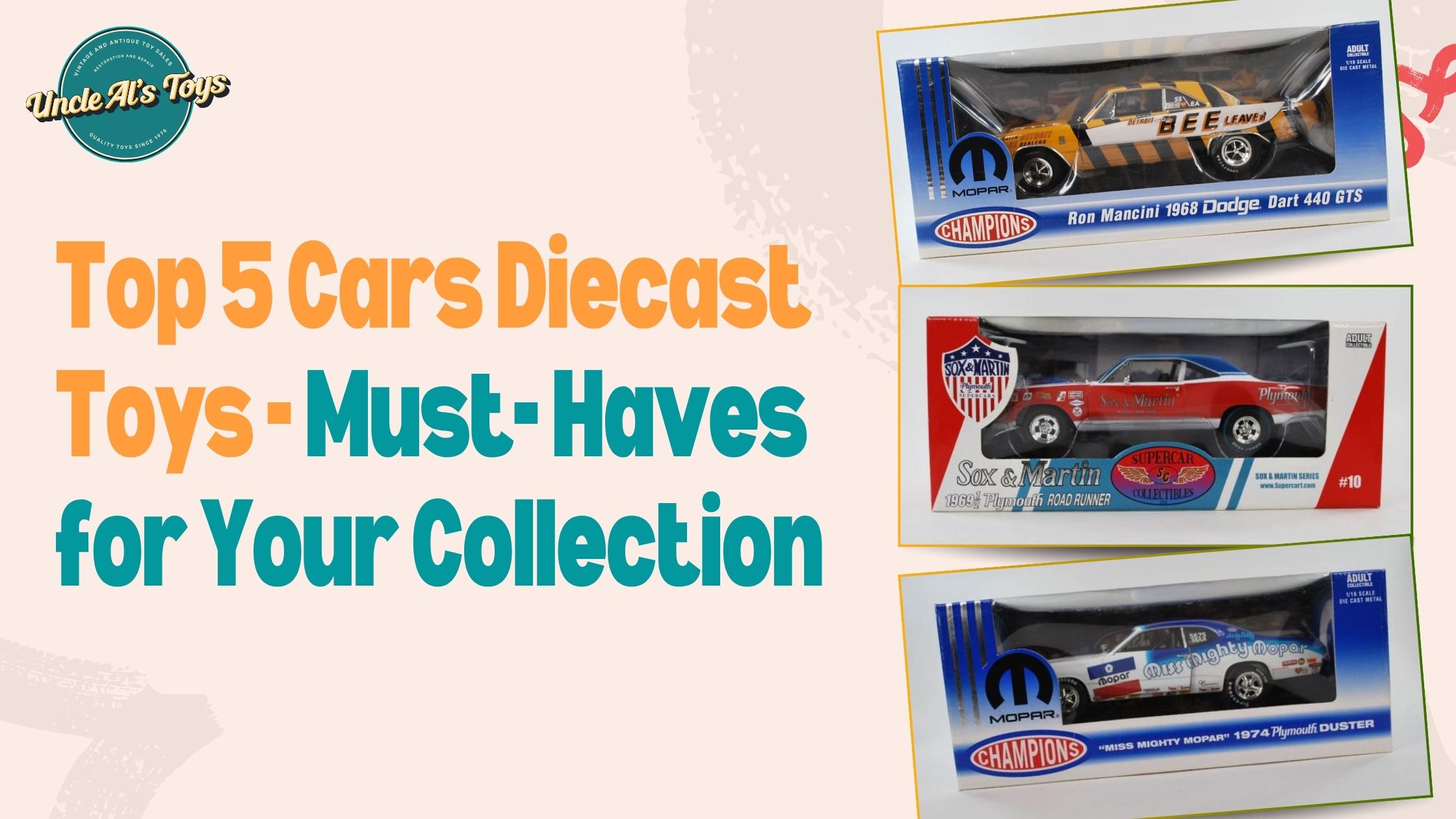
Cars diecast toys are more than just mini replicas—they are tiny time machines packed with nostalgia, artistry, and collector value. Whether you are a lifelong hobbyist or just starting your journey, there is something irresistible about holding a scaled-down classic in the palm of your hand. These miniature marvels have revved their way into the hearts of enthusiasts for decades, transforming kitchen tables into racetracks and display shelves into museums of metal.
But not all cars diecast toys are created equal. Some are mass-produced and easy to find, while others—like rare cars diecast toys or vintage diecast toys—are cherished treasures that can command serious admiration and value. This guide dives into five standout pieces that every serious collector should know about. From historical significance to impeccable craftsmanship, each toy on this list earns its spot for a reason.
Curious which cars make the cut? Buckle up—we are about to take a ride through diecast greatness.
Top 5 Cars Diecast Toys You Cannot Miss
The world of cars diecast toys is vast, but certain models shine brighter than the rest. These five must-haves are celebrated not just for their aesthetic appeal but for their rarity, story, and the reverence they hold in collector circles. If you are looking to elevate your collection, these are the legends to watch for.
1969 Hot Wheels Redline Volkswagen Beach Bomb
This icon is the holy grail of rare cars diecast toys. Originally designed with surfboards mounted in the back window, the early prototype of the Beach Bomb had stability issues, making it unsuitable for the Hot Wheels track system. Only a handful of the rear-loading versions were produced before the design was altered. Today, the original model is one of the most valuable vintage diecast toys ever made, with prices soaring into six figures at auctions.
Collectors covet this piece not just for its scarcity, but for what it represents—a bold experiment from Hot Wheels at the height of its innovation in the late ‘60s. If you spot one, consider it a once-in-a-lifetime opportunity.
You May Like – Hot Wheels 1932 Ford Deuces Wild Model Car 1/18 Scale By Mattel
1965 Corgi James Bond Aston Martin DB5
When it comes to cinematic fame, few cars diecast toys rival the prestige of the Corgi DB5. Based on the famous vehicle from “Goldfinger,” this model came loaded with spy-themed features: ejector seat, rotating license plate, and hidden machine guns. Corgi released several versions over the years, but the earliest 1965 edition remains a crown jewel for collectors.
What makes this one of the more desirable vintage diecast toys is its flawless blend of pop culture and fine craftsmanship. It bridges generations of fans—Bond lovers and diecast collectors alike.
You May Like – Corgi Comics Popeye Paddle Wagon with Box
1953 Dinky Toys No. 29c Double Decker Bus
Straight out of post-war Britain, this diecast bus captures a slice of history with its detailed design and nostalgic charm. While many Dinky Toys were mass-produced, specific paint variations and original packaging elevate certain buses into the category of rare cars diecast toys.
Collectors prize the 29c for its durability, authentic double-decker shape, and vintage decals. Over the years, it has become a staple in any display of mid-century vintage diecast toys, especially for those drawn to public transport or British toy history.
You May Like – Old Fashioned Double Decker Bus toy by Modern Toys
1977 Matchbox Superfast Stretcha Fetcha Ambulance
It may look unassuming at first glance, but this Matchbox model holds a surprise—its scarcity lies in the color variant. While most were painted white, a limited run in metallic pink was released and quickly discontinued. Today, the pink version is sought after by collectors of rare cars diecast toys, fetching impressive bids when found in good condition.
As part of the Superfast line, the Stretcha Fetcha represents Matchbox’s transition into speedier models to compete with Hot Wheels. It is a vivid reminder of how market competition shaped the evolution of diecast toys in the late 20th century.
You May Like – 1957 Tonka Rescue Squad No 5 Fire Dept Metro Van Pressed Steel – Leon Special Price
1982 Tomica Nissan Skyline Turbo RS
For fans of Japanese classics, the Tomica Skyline RS is a standout among cars diecast toys. Produced in the early ‘80s, this model captures the essence of Japan’s growing street racing culture. Tomica’s commitment to realism, from the proportions to the factory-accurate paint jobs, makes their toys particularly beloved by serious collectors.
The Skyline RS is not just another model car—it is a link to a pivotal moment in automotive and toy history. Early releases, especially those in mint condition, are climbing steadily in value, joining the ranks of vintage diecast toys that are now impossible to replace.
Why These Cars Stand Out in a Collection
Not all cars diecast toys hold the same value or emotional pull. Some instantly command attention because of their rarity, history, or unique features. What separates the exceptional from the ordinary often comes down to a few critical factors. Whether you are hunting for rare cars diecast toys or hoping to understand why certain pieces become icons, it helps to look under the hood—figuratively and sometimes literally.
Brand Prestige
Collectors gravitate toward brands known for quality, innovation, and historical relevance. Names like Hot Wheels, Matchbox, Corgi, and Tomica have become synonymous with top-tier cars diecast toys. These companies not only shaped the industry but also created enduring legacies. When a model comes from a trusted brand, it often carries a pedigree that increases its desirability.
Rarity and Limited Production
The rarity of a model often drives its collectibility. Limited production runs, regional releases, and factory errors can all turn an ordinary toy into a hot commodity. Rare cars diecast toys don’t just look good on a shelf—they tell a story of scarcity and demand. For example, a casting that was only sold in Japan or one that features an error in paint or labeling instantly becomes more valuable.
Historical and Cultural Significance
Some cars diecast toys stand out because they connect directly to real-world history. A miniature version of a war-era truck or a car tied to a blockbuster movie evokes more than just visual interest—it carries a narrative. Vintage diecast toys often reflect the design language and cultural priorities of their time, turning them into collectible snapshots of the past.
How to Spot Rare or Vintage Diecast Toys
If you’re getting serious about collecting, knowing how to identify rare and vintage diecast toys is essential. Spotting a valuable piece among the crowd takes a keen eye, some research, and an understanding of what makes cars diecast toys unique. Fortunately, a few telltale signs can guide your discovery.
Condition and Originality
Condition is king. Cars diecast toys in mint condition—meaning no chips, scratches, or missing parts—hold far more value than their worn counterparts. Original packaging can double or even triple a toy’s worth. Look for intact decals, clean wheels, and authentic paint jobs. Reproductions and repaints may look shiny, but they lack the collector’s premium attached to original pieces.
Limited Editions and Factory Errors
Limited edition releases are highly sought after, especially when tied to a specific event, anniversary, or geographic region. Factory errors, while unintentional, often become rare cars diecast toys due to their low production numbers. A mismatched wheel or upside-down decal might seem like a mistake, but for collectors, it is a jackpot.
Scale and Detail Accuracy
The scale of a model plays a key role in its collectibility. Common scales like 1:64, 1:43, and 1:18 each appeal to different segments of collectors. However, detail matters across the board. Cars diecast toys that mirror the fine lines, paint tones, and proportions of their real-life counterparts are always more impressive. The more realistic the execution, the higher the toy’s standing among enthusiasts.
Age and Authenticity Markers
Older does not always mean better—but with diecast, it often does. Vintage diecast toys produced in the 1950s through 1980s are now relics of a bygone era. Many were built with heavier metals and carry distinct markings on the base, such as brand stamps, production year, and country of origin. Learning to read these subtle clues helps confirm a toy’s authenticity and age.
Tips for Starting or Expanding Your Collection
Whether you are just getting into cars diecast toys or looking to level up your current collection, strategy is everything. While the temptation to grab every cool model you see is real, experienced collectors know that focus, care, and patience pay off in the long run.
Know What You Love
Start by identifying what excites you. It’s vintage diecast toys from a specific decade, or perhaps you’re drawn to muscle cars, movie-themed models, or trucks from international brands. Building your collection around a niche makes it more personal and meaningful—and it helps you stay focused when new toys hit the market.
Learn from the Community
Collectors form vibrant online and in-person communities. Forums, social media groups, and toy shows are treasure troves of knowledge. They offer insight on upcoming releases, fake spotting, restoration tips, and where to find rare cars diecast toys. Do not hesitate to ask questions—most enthusiasts are happy to share what they know.
Buy Smart
Impulse buys can be fun, but smart shopping is the backbone of a lasting collection. Look for reputable sellers who specialize in cars diecast toys. If you are aiming for vintage diecast toys, ask for detailed photos and proof of authenticity. Auctions and estate sales can also uncover hidden gems, often at lower prices than you would expect.
Care for Your Collection
Storage and display matter. Exposure to sunlight, humidity, and dust can deteriorate even the most durable models. Keep your cars diecast toys in a dry, climate-controlled space. Clear display cases not only protect them but also show them off in style. For high-value items, consider insurance—it may sound extreme, but serious collectors know it is worth the peace of mind.
Wrapping Up
Cars diecast toys are more than collectibles—they are living history in miniature form. Every model, from the Hot Wheels Beach Bomb to the Tomica Skyline RS, offers a unique blend of craftsmanship, nostalgia, and value that appeals to collectors young and old. These tiny vehicles transport us through time, telling stories of innovation, culture, and sometimes even personal memories tied to childhood play.
Whether you are tracking down rare cars diecast toys or cherishing a shelf full of vintage diecast toys passed down through generations, collecting is as much about the thrill as it is about preservation. The models covered in this guide are just the beginning. There are thousands more waiting to be discovered, restored, and remembered.
If you are building a serious collection or just starting to explore the world of cars diecast toys, focus on what speaks to you. Invest in knowledge, connect with other enthusiasts, and most importantly—enjoy the ride. This hobby is not just about metal and paint; it is about passion, patience, and the joy of holding history in your hands.
Frequently Asked Questions – FAQs
-
What are cars diecast toys and why are they collectible?
Cars diecast toys are miniature metal models of real-life vehicles, typically made using a die-casting process that results in durable, detailed replicas. They have become collectible due to their craftsmanship, nostalgic appeal, and historical significance. Collectors often seek out models from popular brands, unique designs, or rare production runs. Many also appreciate the tactile experience and visual display value, making these toys treasured items across generations.
-
Which diecast toy cars are considered rare and valuable?
Rare cars diecast toys typically include models with limited production runs, factory errors, special editions, or those released decades ago and now in short supply. Examples include the 1969 Hot Wheels Redline Beach Bomb or early Corgi Bond cars. Value increases with factors like condition, packaging, brand reputation, and provenance. These models often fetch high prices at auctions and are considered centerpieces in any serious collection.
-
How can I tell if a vintage diecast toy is authentic and not a reproduction?
To spot authentic vintage diecast toys, inspect the base for brand stamps, country of origin, and year markings. Original paint, wear patterns, and packaging also offer clues. Many reproductions lack the precise detailing and weight of original castings. Researching the specific model and comparing it to verified originals is essential. Consulting experienced collectors or using identification guides can also help verify authenticity.
-
Which brands made the most sought-after diecast cars?
The most sought-after brands for cars diecast toys include Hot Wheels, Matchbox, Corgi, Dinky Toys, and Tomica. Each brought something unique to the table—Hot Wheels revolutionized design with Redline wheels, while Corgi and Dinky led early innovations in realism and functionality. Tomica, known for its accurate Japanese vehicles, also gained collector attention. These brands consistently deliver both quality and collectible appeal.
-
What scale of diecast cars should I collect for best value and detail?
The most popular scales for cars diecast toys are 1:64, 1:43, and 1:18. For high detail, 1:18 scale models offer intricate interiors and working features, while 1:64 scale is ideal for volume collecting and affordability. Serious collectors often choose based on display space, brand preference, and the level of realism desired. The right scale also depends on personal taste and collecting goals.
-
Where is the best place to buy rare diecast toy cars?
Rare cars diecast toys can be found through reputable dealers, online auctions, toy shows, collector forums, and estate sales. Specialized hobby shops and marketplaces focused on collectibles are great starting points. It is crucial to verify the authenticity and condition of the piece before purchasing, especially for vintage diecast toys. Networking with other collectors can also lead to private sales or trades.
-
How should I store and care for vintage diecast toys?
Proper storage of vintage diecast toys is essential to preserve their value and appearance. Keep models in a dry, temperature-controlled environment, away from direct sunlight to prevent paint fading and metal deterioration. Use padded display cases or shelves with minimal dust exposure. For higher-value pieces, consider archival-grade boxes and insurance coverage. Gentle cleaning with soft brushes or cloth can help maintain their condition without damaging delicate details.