

A rocket ship toy has always been more than just a simple plaything—it’s a gateway to entire galaxies of imagination. From the moment a child grips one in their hands, the countdown begins. The living room can instantly transform into a space station, the backyard into a launchpad, and the night sky into an invitation to dream beyond the stars. That sense of wonder is what makes rocket ship toys so timeless and important for childhood development.
Imagination is the lifeblood of childhood, and toys are often the tools that help kids build their first stories and adventures. A rocket ship toy doesn’t just entertain; it encourages children to think beyond Earth, beyond the ordinary, and into possibilities that feel infinite. With each launch, a child learns that there are no limits to where their creativity can take them. This is why parents, educators, and collectors continue to see these space-themed treasures as essential for both play and inspiration.
At Uncle Al’s Toys, we’ve seen firsthand how rocket ship toys can inspire both kids and adults. Children gain a safe, playful way to experiment with big ideas like space travel, science, and teamwork, while collectors appreciate the craftsmanship, history, and artistry embedded in vintage and rare rocket ship toys. Each piece, whether designed for active play or display, carries its own story—stories that bridge generations, connect families, and keep the spark of exploration alive.
Ultimately, the magic of a toy rocket ship lies in its ability to do two things at once: fuel creativity and preserve curiosity. For kids, it’s the launchpad to future dreams. For adults, it’s a reminder of their own childhood voyages to the stars.
How A Rocket Ship Toy Ignites A Child’s Imagination
The power of a rocket ship toy lies in its simplicity. On the surface, it’s just a small model of a spacecraft. But when placed in a child’s hands, it becomes a living symbol of adventure, discovery, and endless storytelling. Whether it’s a classic tin design or one of the more interactive rocket ship toys with lights and moving parts, the journey begins as soon as a child declares, “Blast off!”
Open-Ended Story Worlds
Every toy rocket ship invites children to create their own missions. Some kids send their ships to the moon, others imagine landings on strange new planets. These storylines help kids practice narrative thinking—shaping characters, inventing challenges, and building entire universes. The more time they spend with rocket ship toys, the more layered and detailed their stories become, encouraging deep creativity that grows with them.
Role-Play and Confidence Building
Pretend play with a toy rocket ship often involves acting out roles: pilot, mission commander, or even alien explorer. By assigning themselves responsibilities, children practice leadership, communication, and teamwork—even when playing alone. This role-play builds confidence and helps them express ideas in ways they might not otherwise explore. Rare rocket ship toys, with their unique designs and historical appeal, add an extra layer of wonder, showing kids how different generations imagined space travel and opening conversations about innovation across time.
Questions That Spark Curiosity
A simple launch often leads to big questions. What makes a rocket fly? How do astronauts breathe in space? Could we live on another planet? A rocket ship toy has the power to turn casual play into moments of genuine curiosity. These questions can lead to science experiments, reading adventures, and even an early love for STEM fields. The toy becomes more than a collectible—it’s a tool for lifelong learning.
Creativity In Action: Simple Projects Inspired By Rocket Ship Toys
A toy rocket ship doesn’t just spark imagination in the moment—it also encourages children to create long after playtime. These toys act as catalysts for art, design, and storytelling projects that can become treasured family activities.
DIY Mission Control
Children can extend their play by building a “mission control” station at home. A table becomes the console, paper buttons and dials transform into controls, and a cardboard microphone lets kids issue flight commands. With their rocket ship toy on the launchpad, the setting takes on a new dimension. This kind of activity combines artistic creativity with dramatic play, keeping kids engaged while encouraging them to design their own space environment.
Space Journals and Sketches
When a child sends their rocket ship toy on a mission, they can record the adventure in a space journal. Drawing planets, sketching the crew, and mapping flight paths turns play into a creative writing exercise. Over time, these journals become keepsakes that showcase a child’s imagination in vivid detail. It also helps build early literacy and storytelling skills in a playful, pressure-free way.
Build-and-Tell Displays
Not every rocket ship toy has to be confined to the toy box. Some children enjoy designing display bases for their spacecraft, complete with stars, craters, and landing zones. This practice blends art with engineering—cutting, gluing, and assembling—while giving kids the pride of showing off their creations. For collectors, particularly those who value rare rocket ship toys, these display elements highlight the uniqueness of each piece and turn a simple toy into a centerpiece.
STEM Takes Off: Learning Benefits Of Rocket Ship Toys
While the creative benefits are obvious, a rocket ship toy also opens doors to learning opportunities in science, technology, engineering, and math. Far from being passive entertainment, these toys introduce children to complex ideas through play, making concepts like motion, sequencing, and problem-solving accessible and fun.
Cause-and-Effect in Launches
Launching a toy rocket ship, whether it’s a friction-powered tin version or a more modern design, teaches children about cause and effect. They quickly learn that the actions they take—pushing, winding, or pressing a button—lead to results. This hands-on understanding of motion is a stepping stone into early physics and helps form the foundation for later scientific learning.
Building Spatial Reasoning
Rocket ship toys often encourage children to imagine movement through three-dimensional space. Plotting where a rocket might land, or picturing its path through planets and stars, builds spatial reasoning skills. This type of mental visualization is essential not only in science but also in everyday problem-solving and creative thinking.
Curiosity Pathways to STEM
Perhaps the most powerful effect of a rocket ship toy is its ability to raise questions. A child might wonder how real rockets work, why astronauts wear suits, or what life might be like on Mars. These questions often lead families toward science experiments, books, and hands-on projects that foster a love of STEM fields. Even collectors of rare rocket ship toys can appreciate how these objects become bridges between fantasy and real-world scientific curiosity, showing how imagination and education are deeply connected.
Age-By-Age Play Guide For Rocket Ship Toys
Every stage of childhood brings new ways to engage with a toy rocket ship. As children grow, their play evolves from simple exploration to complex storytelling, making it important to match the right toy to their age and abilities.
Toddlers (1–3 years)
At this stage, play is about sensory discovery. A sturdy rocket ship toy with smooth edges, bright colors, and safe shapes captures a toddler’s attention while encouraging early motor skills. The joy of pushing, holding, and exploring different textures lays the groundwork for curiosity. These first experiences are less about structured play and more about creating a sense of wonder.
Preschoolers (3–5 years)
For preschoolers, storytelling takes center stage. A toy rocket ship becomes the centerpiece for pretend missions, alien encounters, and countdown launches. Interactive features—such as simple wind-up mechanisms or detachable parts—make the toy even more engaging. With rocket ship toys, preschoolers start to connect cause-and-effect play with creative narratives, learning to combine imagination with structured thinking.
Early Grade Kids (6–8 years)
Children in this age group crave more detail and complexity. A rocket ship toy with moving parts, intricate designs, or assembly features challenges their developing problem-solving skills. They begin to treat play as both a learning tool and a form of creative expression. This is also when rare rocket ship toys can capture their attention, not just as playthings but as fascinating artifacts of how space exploration has been imagined across generations.
Choosing The Right Rocket Ship Toys For Your Child
Selecting the right rocket ship toy means balancing safety, creativity, and longevity. Since every child plays differently, the best toy is one that grows with their imagination and encourages repeated exploration.
Materials and Safety
The first priority in choosing a rocket ship toy is safety. Toys should be made from non-toxic materials, with no sharp edges or small parts that could pose risks for younger children. For collectors, vintage pieces may not always meet modern safety standards, so rare rocket ship toys are often best displayed rather than handled during active play.
Features that Encourage Growth
A well-chosen rocket ship toy is one that adapts to a child’s interests over time. Modular parts, detachable sections, or interactive mechanisms keep children engaged while offering new challenges as they age. These features encourage imaginative play and ensure the toy stays relevant long after the first launch.
Storage and Display Solutions
Protecting rocket ship toys is just as important as enjoying them. For children, toy bins and shelves keep play areas organized while preventing damage. For collectors, careful display cases help preserve the value and beauty of rare rocket ship toys. Displaying these pieces can even inspire kids to see their own toys as something worth caring for, teaching responsibility through admiration.
A Beginner’s Guide To Rare Rocket Ship Toys
For many collectors, a rocket ship toy is more than a childhood memory—it’s a treasure. Rare rocket ship toys stand out not only for their unique designs but also for the stories they carry from earlier decades of toy-making. Whether you are just starting your collection or already own a few prized pieces, understanding what makes these toys rare can help you appreciate them even more.
What Makes a Toy Rare
A rare rocket ship toy often owes its uniqueness to limited production runs, original packaging, or exceptional condition despite its age. Some were made in smaller quantities, while others gained their value because so few have survived intact. Collectors quickly learn that rarity isn’t about age alone but about the combination of craftsmanship, scarcity, and preserved detail.
Authenticity and Value
When adding a rare rocket ship toy to a collection, authenticity matters. Original paint, decals, and moving parts all affect value. Reproduction pieces can be beautiful and enjoyable, but they should always be recognized for what they are. Understanding these differences ensures that your collection reflects both history and authenticity.
Caring for Rare Pieces
Proper care keeps rare rocket ship toys looking their best. Gentle cleaning with soft cloths, avoiding harsh chemicals, and storing them in a stable environment prevents damage. Some collectors choose display cases to protect against dust and sunlight. For especially delicate pieces, consulting restoration specialists ensures that the toy retains both its condition and its charm for future generations.
Only-At-Uncle Al’s: Featured Space Toys You Can Bring Home Today
At Uncle Al’s Toys, our collection of space-inspired treasures includes more than just the average rocket ship toy. We specialize in vintage designs, reproductions, and rare rocket ship toys that inspire collectors and delight children alike. Each piece is chosen for its craftsmanship and ability to spark wonder, whether it’s played with or displayed.
Pyro X 300 Space Cruiser
This reproduction rocket ship toy carries the sleek lines of mid-century space design. Perfect for collectors who want the look and feel of a vintage piece, it offers both charm and conversation value. Its timeless style brings back the excitement of an era when space travel captured the imagination of millions.
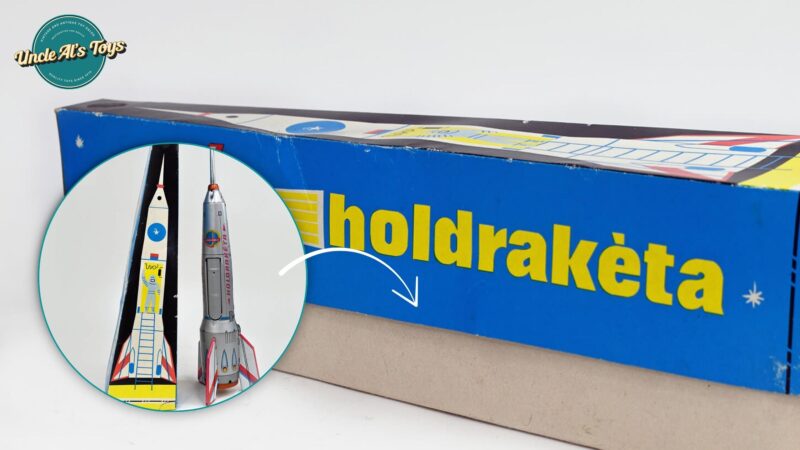
Vintage Rocket Ship Tin Friction Space Toy “Holdraketa”
One of the standout rare rocket ship toys in our collection, the Holdraketa features vivid artwork and a smooth friction mechanism. It not only makes a playful companion for imaginative launches but also serves as a stunning display piece, showcasing the artistry of classic tin toys.
Mission Space X-2 Spacecraft (Walt Disney World)
Out of production and highly sought after, this collectible spacecraft is perfect for enthusiasts who value toys with cultural significance. For collectors, it represents both nostalgia and exclusivity, making it a rare rocket ship toy that is as much a piece of history as it is a display-worthy artifact.
IWG Rocket Ship (Rocket World, Green)
This whimsical piece combines modern collectible art with classic rocket design. The IWG Rocket Ship brings a playful style to any shelf, appealing to both younger fans and seasoned collectors who enjoy unique variations on the traditional rocket ship toy form.
FAO Schwarz Candy Rocket Sweet Dispenser
Blending function with fun, this toy adds a playful twist to space collectibles. The candy dispenser format makes it a lively display item while retaining the iconic rocket ship shape that sparks joy for kids and collectors alike.
Parts for the XM-12 Moon Rocket
For collectors maintaining their vintage fleet, we offer canopy replacements, nose cones, and fin tips for the XM-12 Moon Rocket. Keeping a rare rocket ship toy in top shape is just as important as owning it, and these carefully crafted parts help preserve authenticity and function.
Repairs, Restoration & Replacement Parts For Rocket Ship Toys
A rocket ship toy, whether modern or vintage, often experiences wear from years of play or storage. While signs of use add character, proper repairs and restorations can extend the life of a treasured piece and even restore its original beauty. At Uncle Al’s Toys, we understand that every spacecraft in a collection deserves the care that preserves both its play value and display appeal.
Common Fixes for Space Toys
Battery-operated and wind-up rocket ship toys sometimes stop functioning due to worn mechanisms, loose wiring, or broken gears. Skilled repair work can bring these toys back to life, ensuring they once again light up, move, or produce the sounds that captivated children decades ago. Even simple fixes, like replacing springs or tightening parts, can make a toy feel brand new while respecting its vintage charm.
When Reproduction Parts Make Sense
Not every damaged rocket ship toy can be repaired with original parts. In these cases, reproduction components provide an effective solution. Carefully crafted canopy replacements, nose cones, and fin tips ensure that the toy maintains its authentic look while regaining structural integrity. For rare rocket ship toys, reproduction parts can prevent further damage and allow collectors to display or even gently interact with the piece without risking additional wear.
Post-Repair Safety Checks
After any repair, safety should always come first. A restored rocket ship toy should be inspected to make sure moving parts function smoothly and that no sharp edges remain exposed. For collectors, this process preserves value. For families, it ensures that rocket ship toys remain safe for children who want to experience the thrill of liftoff.
Read Also: Building Fleet: Best Toy Spaceship Rocket Models for Collectors
Play Prompts: Seven Mission Ideas For Your Rocket Ship Toy
A rocket ship toy is more than a static object—it’s a portal to adventures limited only by imagination. While kids naturally create stories of their own, guided play prompts can expand their experiences and give them fresh missions to explore.
Countdown and Launch Role-Play
Children can create a dramatic liftoff sequence with their rocket ship toy. Using homemade checklists, they can practice counting down from ten and shouting “blast off!” This simple ritual turns play into an exciting performance while building sequencing skills.
Planet Scavenger Hunt
Transform the living room or backyard into an alien planet. Everyday objects become craters, rocks, or mysterious samples for astronauts to collect. With their rocket ship toys leading the mission, children practice observation, problem-solving, and teamwork.
Designing Crew Patches and Ship Names
Every mission deserves its own identity. Children can design a crew badge or invent a name for their rocket ship toy. Drawing logos, writing mottos, and presenting their ideas boosts creativity and confidence. For collectors, even rare rocket ship toys can inspire this kind of artistic expression.
Living-Room Space Museum
Kids can set up a space exhibit at home, displaying their rocket ship toys along with hand-drawn placards describing each one’s mission history. This transforms imaginative play into an educational activity, blending storytelling with public speaking skills.
Read Also:
- The Hunt for Rarity: Discovering Unique Toy Spaceship Rocket
- Iconic Vintage Rocket Spaceship Toy: Designs from Space Age
Wrapping Up
A rocket ship toy is more than a collectible or a plaything—it is a symbol of imagination, curiosity, and discovery. For children, it opens the door to storytelling, role-play, and creative projects that encourage both artistic expression and STEM learning. For collectors, rocket ship toys capture the craftsmanship and cultural history of past decades, offering both nostalgia and lasting value. And for families, these toys bridge generations, becoming heirlooms that spark conversations and shared adventures.
Rare rocket ship toys add another layer of meaning. They represent the evolution of design, the artistry of toymakers, and the enduring fascination with space exploration. Caring for them, repairing them, or displaying them keeps alive a tradition of wonder that began when the first toy rockets were made.
At Uncle Al’s Toys, we believe every rocket ship toy—whether vintage, rare, or newly reproduced—has the power to inspire. By giving kids the tools to imagine beyond Earth and by offering collectors authentic treasures to preserve, these toys continue to remind us that the sky is never the limit.
Frequently Asked Questions – FAQs
-
What age is a rocket ship toy best for?
A rocket ship toy can be enjoyed by children as young as toddlers, provided the design is age-appropriate with safe materials and no small detachable parts. For toddlers, simple shapes encourage exploration, while preschoolers benefit from interactive features that build storytelling. Older children enjoy more detailed rocket ship toys with moving parts and assembly challenges. Collectors, of course, may prefer rare rocket ship toys that are best appreciated as display pieces rather than playthings.
-
How does a rocket ship toy support STEM learning at home?
A rocket ship toy helps children understand cause and effect, sequencing, and even basic physics through play. When kids launch a toy rocket or act out missions, they are engaging with ideas like propulsion, space travel, and exploration. This sparks curiosity that can lead to books, experiments, and a deeper interest in science and technology. Even rare rocket ship toys can inspire conversations about history, engineering, and how space exploration has been imagined over time.
-
Are vintage rocket ship toys safe for kids to handle?
While many vintage and rare rocket ship toys remain in excellent condition, they were not always designed with today’s safety standards in mind. Some may contain small parts, sharp edges, or outdated paints. For this reason, vintage pieces are best preserved for display rather than active play. Parents who want their children to enjoy the experience of space toys should choose modern reproductions or sturdy new designs instead.
-
What features should I look for when buying rocket ship toys?
When choosing a rocket ship toy, consider safety, durability, and play value. Younger children need simple, sturdy designs, while older children may enjoy detailed models with detachable parts or interactive features. Collectors often seek rare rocket ship toys with original packaging, intricate artwork, and mechanisms that reflect the craftsmanship of their era. The best choice is one that balances your child’s imagination with lasting quality.
-
How do I clean or restore a vintage rocket ship toy without damage?
Cleaning a vintage rocket ship toy requires gentle care. A soft cloth and mild solution can remove dust and dirt without harming delicate paint or decals. Harsh chemicals should be avoided, as they can strip away original finishes. For rare rocket ship toys, professional restoration services are often the safest option, especially if mechanical parts or original artwork are involved. Proper cleaning preserves both condition and value.
-
Where can I find rare rocket ship toys and what makes them rare?
Rare rocket ship toys can be found through specialized toy shops, auctions, and collections curated by experts like Uncle Al’s Toys. A toy becomes rare due to limited production, preserved packaging, or exceptional condition after decades of existence. Uniqueness of design and cultural significance also play a role. These factors not only make them collectible but also transform them into historical artifacts worth treasuring.
-
Are rare rocket ship toys a good investment for collectors?
Yes, many rare rocket ship toys hold or increase in value over time, particularly those in excellent condition with original packaging. Collectors appreciate them not only for their monetary worth but also for their artistry and cultural importance. While no investment is guaranteed, rare rocket ship toys have proven to be enduring assets in the world of vintage collectibles, combining nostalgic value with historical significance.
-
How should I display and store rocket ship toys to prevent wear?
Rocket ship toys should be stored in a clean, dry environment away from direct sunlight, which can fade paint and weaken materials. Display cases provide protection against dust and accidental handling, while maintaining visibility for enjoyment. For rare rocket ship toys, climate-controlled storage may be ideal to prevent long-term damage. Children’s play pieces can be kept on shelves or in toy bins, with periodic checks to ensure moving parts remain safe and functional.