

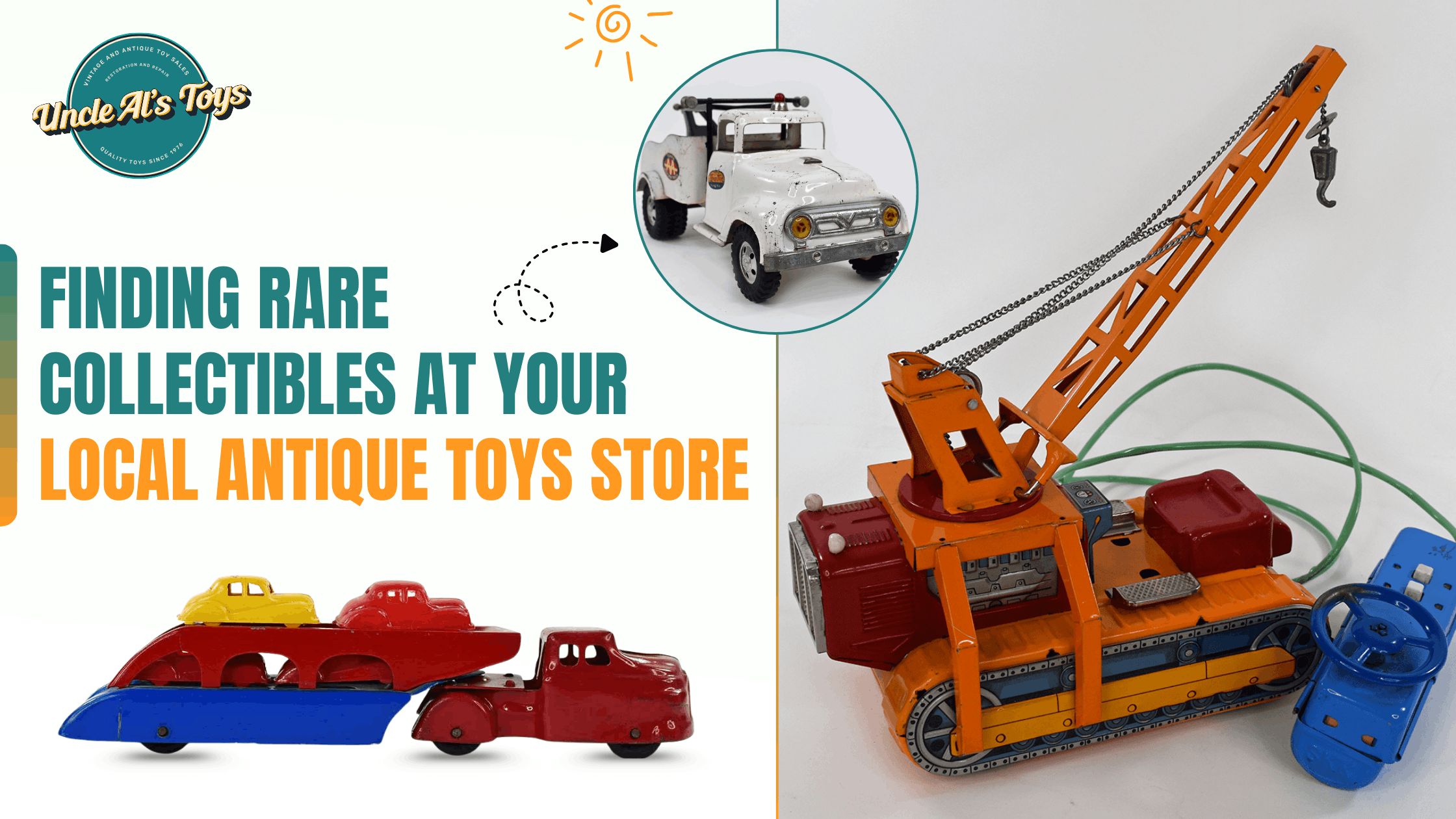
An antique toys store has a way of pulling you in before you even realize what’s happening. One moment you’re glancing at a window display, and the next you’re imagining who once wound that tin car or pushed that pressed steel truck across a wooden floor decades ago. Collectible toys carry stories, not just price tags, and that emotional pull is exactly why so many rare finds still surface in places most people overlook.
Finding rare collectibles isn’t always about chasing the loudest auction or the most hyped listing. Often, it’s about knowing where to look and how to look. Local shops remain one of the most reliable places to discover authentic collectible toys, especially tin toys, pressed steel vehicles, wind-up pieces, and other mechanical classics that still have real character. These are the kinds of items that reward patience, curiosity, and a careful eye rather than impulse buying.
That doesn’t mean modern collectors ignore digital shopping. Many successful buyers blend local browsing with careful research through an online antique toys store, using each approach to inform the other. When you understand how rarity, condition, and originality work together, the hunt becomes smarter and far more enjoyable. Whether you’re standing in front of a display case or comparing photos of antique and rare toys online, the principles stay the same.
This guide focuses on how to recognize real collectible opportunities, starting with what a trusted antique toys store can offer that no endless scroll ever will.
How an Antique Toys Store helps you spot rare collectibles faster
Why local shelves still beat endless scrolling
Walking into an antique toys store gives you instant context that no screen can fully replace. You can feel the weight of a pressed steel truck, hear the tension in a wind-up mechanism, and see how original paint reacts under real light. These details matter. Many rare collectible toys don’t look impressive in photos, especially when honest wear hides their history. In person, those same pieces often reveal original parts, untouched lithography, and craftsmanship that photos flatten out.
Another advantage is comparison. In a well-curated shop, similar toys sit near each other. That makes it easier to spot what’s unusual. A different wheel style, an uncommon key, or a less-seen manufacturer marking can jump out immediately. This kind of visual education sharpens your instincts far faster than browsing an online antique toys store alone.
The quick evaluation mindset collectors use
Experienced collectors don’t need hours to judge a toy’s potential. Inside an antique toys store, they develop a rhythm. First comes the overall impression. Is the toy complete? Does it look untouched or heavily altered? Then comes movement. Wind-up toys should engage smoothly, even if they don’t run perfectly. Pressed steel vehicles should sit square, not twisted or stressed.
Condition matters, but originality matters more. A toy with worn paint but original parts often outranks a repainted example with replaced components. This is where many new buyers stumble, especially those transitioning from antique and rare toys online shopping, where restoration details aren’t always obvious. In person, you can see tool marks, mismatched screws, and subtle changes that photos may hide.
Asking the right questions without pressure
One underrated benefit of an antique toys store is conversation. Owners and staff usually know how and where a toy came from. Asking when a piece arrived, whether parts were replaced, or if it came from an estate can reveal more than any tag. These details help confirm whether you’re looking at a genuine collectible or just an attractive display piece.
This kind of insight also carries over when you later browse an online antique toys store. Once you’ve handled enough real examples, descriptions and photos start to read differently. You know which claims matter and which are just sales language.
How local finds guide smarter online searches
Time spent in an antique toys store often shapes how collectors shop online afterward. Seeing real tin toys and pressed steel vehicles in person creates a mental reference. When you later explore antique and rare toys online, you can quickly filter out listings that don’t match what you’ve learned. Dimensions, proportions, finishes, and construction details become familiar rather than abstract.
Collectors who skip local shops often overpay online because they lack this baseline. Those who start locally tend to use online platforms more strategically, searching for specific models, manufacturers, or parts they already understand. The result is fewer regrets and stronger collections.
Speed comes from experience, not rushing
Spotting rare collectibles quickly doesn’t mean rushing decisions. It means recognizing patterns. An antique toys store trains your eye to notice what’s uncommon, what’s original, and what’s worth deeper inspection. Over time, you’ll spend less energy on obvious reproductions and more attention on the pieces that deserve it.
That same speed applies when evaluating antique and rare toys online. Listings that once felt overwhelming start to sort themselves out almost instantly. You’ll know when to dig deeper and when to move on. In the end, the combination of hands-on experience and informed online searching creates a collector who buys with confidence rather than hope.
An antique toys store isn’t just a place to buy. It’s where knowledge accelerates, instincts sharpen, and rare finds stop being lucky accidents and start becoming informed discoveries.
What makes a collectible toy truly rare
Rarity versus popularity in today’s collecting world
Not every old toy qualifies as rare, and this is where many buyers get confused. Inside an antique toys store, you’ll often see shelves filled with vintage pieces that are decades old but still relatively common. True rarity comes from limited production, short manufacturing runs, or toys that didn’t survive heavy play. When you understand this distinction, you stop chasing age and start recognizing scarcity.
A toy can be popular without being rare, and rare without being widely known. Collectors who spend time in an antique toys store learn to spot those quiet standouts. These are the toys that don’t scream for attention but have details that set them apart, such as unusual lithography, uncommon color variations, or early mechanical designs. The same principle applies when browsing an online antique toys store, but the learning curve is much steeper without hands-on experience.
Condition that actually matters to collectors
Condition plays a major role in value, but not in the way many newcomers expect. A toy doesn’t need to look perfect to be desirable. In fact, honest wear often confirms authenticity. Inside an antique toys store, seasoned collectors look first for originality. Original paint, original wheels, original wind-up keys, and unaltered mechanisms usually outweigh cosmetic flaws.
Cracks, chips, and surface wear are part of a toy’s story. Heavy repainting, modern screws, or incorrect replacement parts can quietly lower value. This is why toys that look “too clean” deserve closer inspection. When shopping antique and rare toys online, this nuance can be harder to judge, which is why photos and descriptions should always be read with a critical eye shaped by real-world exposure.
Authenticity and the small details that prove it
Authenticity is often confirmed through details most people overlook. Maker marks, stamping styles, rivet placement, and even the way metal edges are finished can reveal whether a toy is original. An antique toys store gives you the chance to study these features up close. Over time, patterns emerge. You begin to recognize how genuine tin toys feel in the hand or how original pressed steel holds its shape.
Reproductions can look convincing online, especially when browsing antique and rare toys online without prior reference. In person, subtle differences become obvious. The paint sheen may be wrong, the weight slightly off, or the mechanism too modern. These are lessons best learned before relying heavily on an online antique toys store for major purchases.
Where rare pieces hide inside a local Antique Toys Store
The areas most shoppers overlook
Rare toys don’t always sit front and center. In an antique toys store, some of the best finds appear in places casual browsers skip. Upper shelves, lower cabinets, and mixed displays often hold items that haven’t been fully researched yet. These toys may lack flashy presentation, but they frequently reward closer inspection.
Display cases draw attention for a reason, yet many shop owners rotate inventory quickly. A newly arrived piece might sit temporarily in a general section before being repriced or relocated. Regular visits to the same antique toys store increase your chances of catching these items early, before they become widely noticed.
Timing your visit for better discoveries
Timing plays a bigger role than most people realize. After estate cleanouts, collections often arrive in batches. An antique toys store may receive several related pieces at once, including variants and accessories that were kept together for decades. Visiting shortly after these arrivals can uncover toys that haven’t yet been compared to current market trends.
This timing advantage mirrors online behavior as well. Collectors who understand how inventory flows locally tend to recognize fresh listings in an online antique toys store faster. When you’ve seen similar toys in person, spotting underappreciated listings among antique and rare toys online becomes much easier.
Mixed lots and partial displays
Some rare toys hide in plain sight because they’re grouped with less valuable items. Mixed lots, partial sets, or incomplete toys can contain components collectors need. Inside an antique toys store, these pieces are sometimes priced conservatively because they don’t look impressive on their own. For knowledgeable buyers, that’s an opportunity.
A missing wind-up key or a single replaced wheel doesn’t always disqualify a toy. If the core piece is original and structurally sound, it may still hold strong collector appeal. Learning to evaluate these situations locally builds confidence that carries over when shopping antique and rare toys online, where partial descriptions are common.
How local browsing sharpens your online instincts
Every visit to an antique toys store trains your eye, even when you don’t buy anything. You learn scale, construction, and variation simply by looking. That experience becomes invaluable when you later browse an online antique toys store. Photos start to make more sense. Measurements feel familiar. Claims about condition are easier to judge.
Collectors who combine local exploration with careful online searching tend to make fewer mistakes. They recognize when a listing feels right and when something seems off. In the long run, the antique toys store acts as a classroom, quietly teaching lessons that no description of antique and rare toys online can fully replace.
The collectible categories to watch for inside a local shop
Tin and lithographed toys that still draw serious attention
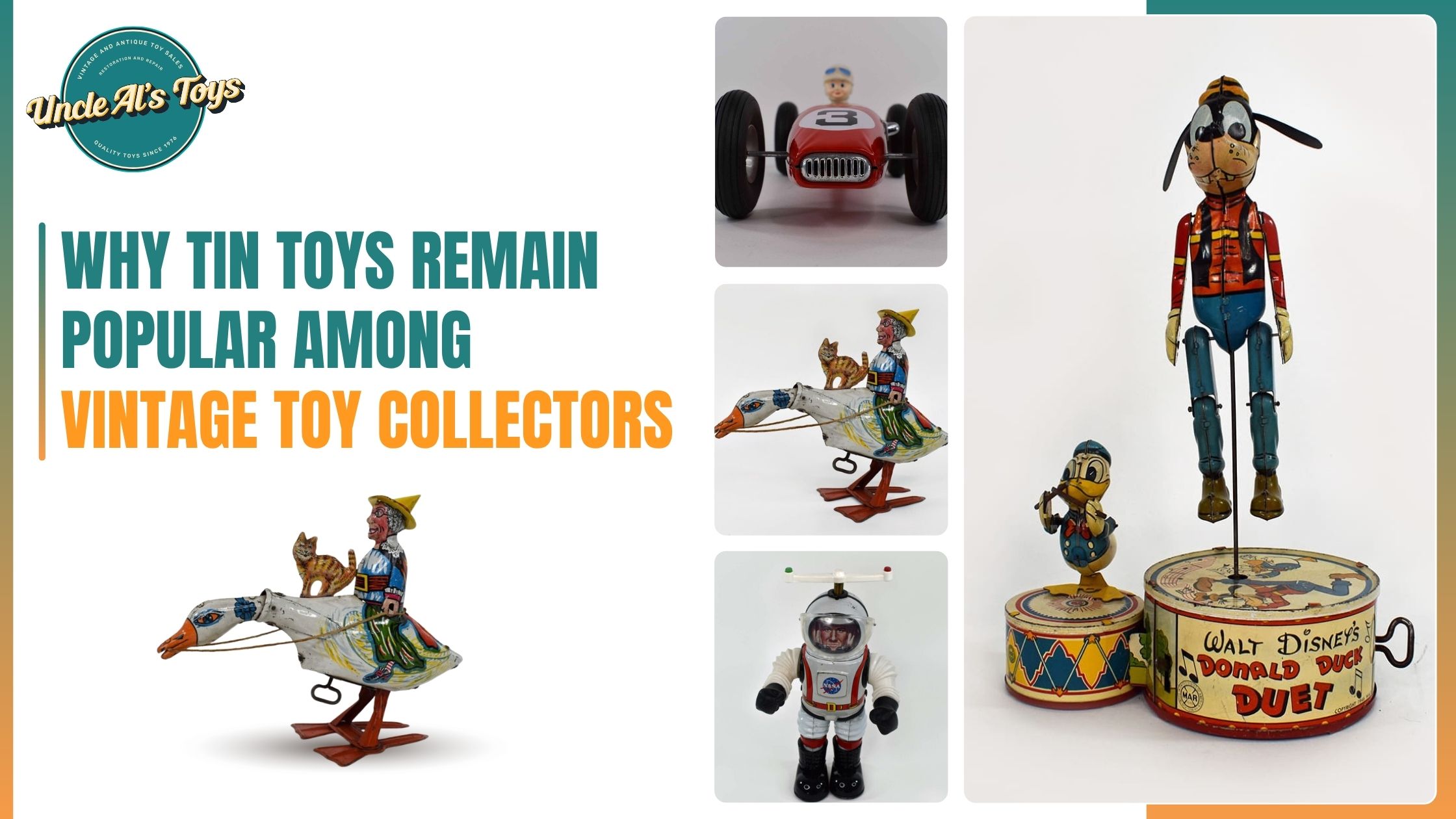
When collectors walk into an antique toys store, tin toys are often the first category they scan. These pieces capture a moment when toy makers blended art, mechanics, and imagination into compact forms. Lithographed tin toys stand out because their graphics were printed directly onto metal, giving them color depth and character that paint alone rarely achieves. Over time, even worn examples can remain desirable if the artwork is original and intact.
Inside an antique toys store, tin vehicles, character toys, and novelty pieces often reveal subtle variations that signal rarity. Differences in lithography, wheel construction, or mechanical design can separate a common example from a scarce one. These are details that become much easier to recognize in person before attempting to compare similar pieces in an online antique toys store or while browsing antique and rare toys online.
Pressed steel toys with presence and durability
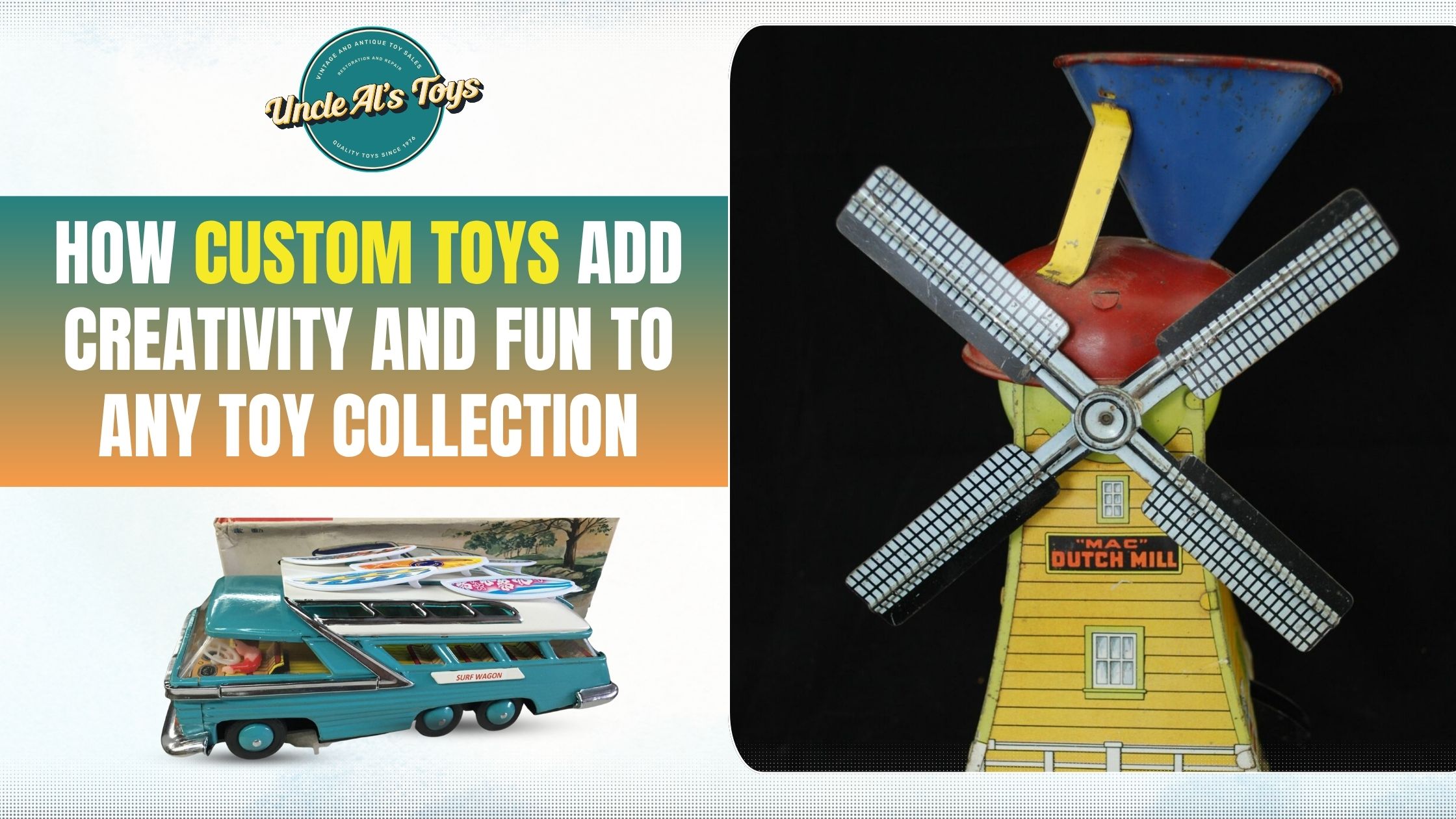
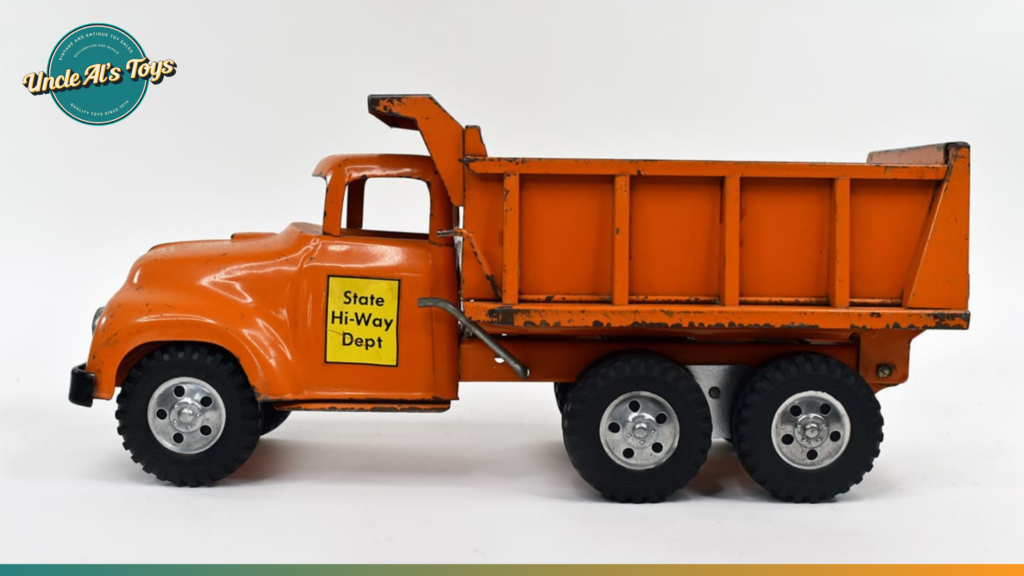
Pressed steel toys carry a different kind of appeal. They feel solid, purposeful, and built to survive. In an antique toys store, pressed steel trucks, transport-style vehicles, and construction-themed toys often command attention simply because of their scale and weight. Collectors value them for their durability, original hardware, and functional features like steering wheels or opening compartments.
What makes pressed steel especially interesting is how condition intersects with originality. Dents and scratches often tell a more honest story than fresh paint. A knowledgeable antique toys store buyer looks for straight frames, original wheels, and factory hardware. This experience pays off later when evaluating listings in an online antique toys store, where heavy restoration can be harder to spot through photos alone.
Wind-up and mechanical toys that still move
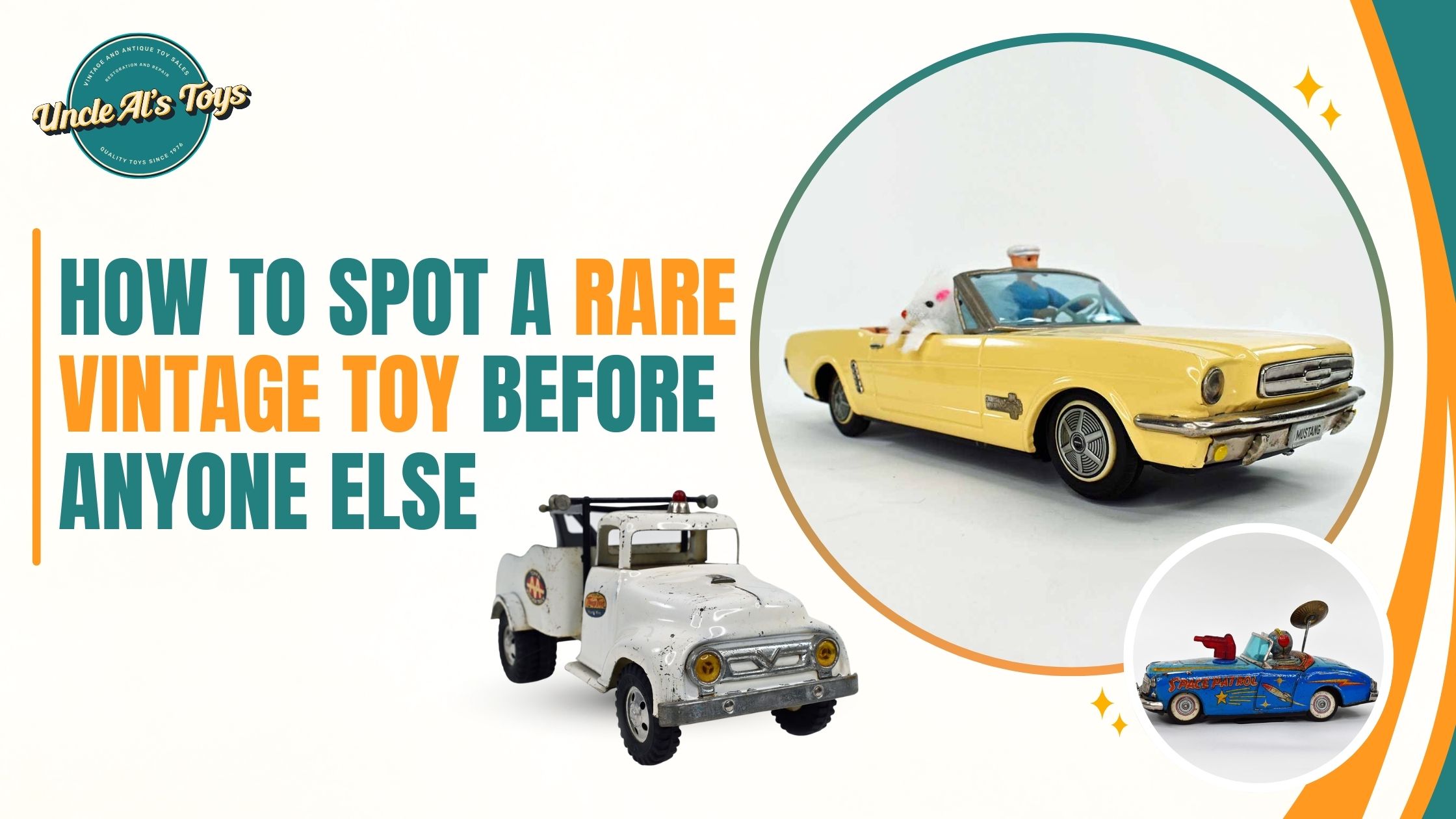
Movement adds life to collectible toys. Wind-up mechanisms, gears, and simple motors turn static objects into interactive pieces of history. Inside an antique toys store, these toys invite closer inspection because functionality matters. Even if a toy doesn’t run perfectly, the presence of original mechanisms significantly affects collectibility.
Collectors often prefer an honest, untouched mechanism over one that has been heavily altered. Understanding how these toys should feel and sound when wound is something best learned locally. Once familiar, collectors become more confident when buying antique and rare toys online, especially from an online antique toys store that provides detailed descriptions of movement and condition.
Replacement parts as part of the collecting ecosystem
Replacement parts play a quiet but important role in collecting. In an antique toys store, items like original-style wind-up keys, wheels, tires, and small metal components help preserve the integrity of collectible toys. While complete originality is ideal, correct period-appropriate parts often protect value far better than leaving a toy incomplete.
Collectors who understand this balance make smarter decisions both locally and online. When browsing antique and rare toys online, knowing which missing parts can be responsibly replaced and which cannot helps buyers avoid costly mistakes. An antique toys store often serves as the place where this knowledge begins.
Buying smart when a tag says “rare”
Separating genuine opportunity from sales language
The word “rare” appears often, but it doesn’t always mean what it should. In an antique toys store, pricing usually reflects hands-on evaluation rather than hype. Even so, smart collectors pause and assess before committing. They look beyond labels and focus on construction, originality, and historical context.
This habit becomes even more important when browsing an online antique toys store, where descriptions carry more weight than physical inspection. Collectors who have trained their eye locally are better equipped to question claims and recognize when a toy’s value comes from substance rather than storytelling.
Restoration versus originality and long-term value
Restoration can preserve a toy, but it can also change it. Inside an antique toys store, collectors often compare restored and unrestored examples side by side. This comparison teaches an important lesson. Light conservation and correct replacement parts can stabilize a toy, while heavy repainting or modern modifications may limit its appeal to serious collectors.
Understanding this balance helps buyers choose wisely when evaluating antique and rare toys online. Photos may highlight fresh finishes, but experienced collectors look for signs of overwork. Time spent handling original pieces in an antique toys store sharpens that judgment.
Pricing with the future in mind
Smart buying isn’t just about today’s price. It’s about long-term satisfaction and stability. An antique toys store often reflects steady market values rather than sudden spikes. Collectors who buy with patience tend to build collections that hold interest and value over time.
This mindset carries over into online shopping. When browsing an online antique toys store, experienced buyers compare listings against what they’ve seen locally. They recognize fair pricing and avoid emotional purchases. In the end, the antique toys store becomes the reference point that keeps collecting grounded, informed, and rewarding rather than impulsive.
When your local hunt turns into an online search
Using in-store experience to shop smarter online
Time spent inside an antique toys store naturally shapes how collectors behave online. After handling real tin toys, pressed steel vehicles, and mechanical pieces, photos stop being just pictures. Scale feels familiar. Materials look different. Even wear patterns begin to make sense. This experience turns online browsing from guesswork into informed comparison.
Collectors who start locally tend to use an online antique toys store with more confidence and restraint. Instead of searching broadly, they look for specific makers, styles, or construction details they already recognize. The antique toys store becomes the reference point, while online listings become an extension of the hunt rather than a replacement for it.
Reading Listings With a Trained Eye at an Antique Toys Store
Descriptions matter, but photos tell the real story. A collector shaped by time in an antique toys store knows how to read between the lines. Clear images of wheels, wind-up mechanisms, undersides, and interior details reveal far more than polished angles. When browsing antique and rare toys online, these small visual cues often decide whether a listing deserves attention.
Measurements also carry more meaning after hands-on exposure. A toy that once seemed large or small online now has context. This reduces surprises and helps collectors avoid purchases that don’t meet expectations once they arrive.
Avoiding common online pitfalls
Online platforms move fast, and urgency can push buyers into mistakes. Collectors grounded in an antique toys store mindset tend to slow down. They recognize when pricing feels inflated or when restoration claims seem vague. This patience protects both budget and collection quality.
Shipping and handling are another concern. Toys that survive decades can still suffer damage if packed poorly. Experienced buyers factor this risk into decisions when shopping an online antique toys store, especially with heavier pressed steel or delicate tin pieces commonly found among antique and rare toys online.
Blending local and online collecting into one strategy
The strongest collections often grow from balance. An antique toys store offers tactile learning and discovery, while online searching expands reach. Together, they create a loop. Local visits sharpen judgment. Online finds fill gaps. Over time, collectors move comfortably between both spaces, guided by the same standards of originality, condition, and authenticity.
Read Also: How to Choose the Best Collectible Toys for Your Collection
After the find: protecting your collectible toys long-term
Handling and cleaning without causing harm
Once a toy leaves an antique toys store and joins a collection, care becomes critical. Gentle handling preserves fragile parts, especially thin tin edges and older mechanical components. Cleaning should always be minimal and cautious. Light dusting and dry methods are often safer than aggressive cleaning that can remove original finishes or markings.
Collectors who learned these lessons early tend to maintain better collections. This knowledge also influences buying decisions when evaluating antique and rare toys online, as they understand which flaws are stable and which may worsen over time.
Display choices that preserve value
Display isn’t just about appearance. Sunlight, humidity, and temperature shifts quietly affect materials. Informed collectors treat display as preservation. Toys displayed away from direct light and excessive moisture age more gracefully, keeping paint, lithography, and metal stable.
An antique toys store often models good display habits, offering subtle lessons simply through observation. Those lessons continue at home, protecting investments and maintaining enjoyment.
Storage and long-term stability
Not every toy stays on display. Proper storage matters just as much. Acid-free materials, stable environments, and thoughtful spacing prevent pressure and corrosion. Collectors who understand this treat storage as part of the hobby, not an afterthought.
This mindset shapes online buying as well. When browsing an online antique toys store, experienced collectors consider whether a piece fits their ability to store and care for it properly, rather than buying purely on impulse.
Knowing when a toy needs attention
Some toys eventually need help. Loose parts, stiff mechanisms, or minor structural issues can worsen if ignored. Addressing these concerns early helps preserve originality and function. The goal is stabilization, not transformation.
Collectors who frequent an antique toys store often develop a strong sense of when intervention is appropriate and when it’s best to leave a toy untouched. That judgment becomes invaluable when assessing antique and rare toys online, ensuring that each new addition strengthens the collection rather than creating future problems.
In the end, collecting doesn’t stop at the purchase. The care that follows determines whether a toy remains a cherished piece of history or slowly fades. An antique toys store may start the journey, but thoughtful stewardship carries it forward.
Buy Now
Wrapping Up
Turning knowledge into confident collecting
Finding rare collectible toys isn’t about luck, and it isn’t about chasing every trend that flashes across a screen. It’s about learning how to see. Time spent in an antique toys store teaches you how to notice the small things that matter, from original parts and honest wear to construction details that signal authenticity. That knowledge compounds with every visit, even on days when you don’t buy a thing.
Collectors who take this steady approach tend to enjoy the hobby longer and with fewer regrets. They build collections that feel personal rather than rushed. When they do explore an online antique toys store or browse antique and rare toys online, they do so with a calm confidence rooted in real experience, not guesswork.
Letting the hunt stay enjoyable
At its best, collecting should feel rewarding, not stressful. Blending local exploration with thoughtful online searching keeps the hunt balanced. The antique toys store remains the foundation, a place where curiosity grows and instincts sharpen. Online shopping simply extends that foundation, opening doors to pieces you might never see locally.
By staying patient, asking questions, and trusting what you’ve learned, you give yourself the best chance to find collectible toys that truly belong in your collection. Over time, the process becomes second nature, and the joy of discovery never really fades.
FAQs - Antique Toys Store
-
What are the most valuable antique toys?
The most valuable antique toys are usually those that combine limited production, strong demand, and high originality. Tin toys with early lithography, pressed steel vehicles with original hardware, and mechanical toys that still retain their original parts often rank highly among collectors. Value isn’t determined by age alone. Inside an antique toys store, you’ll often see older toys that are common alongside slightly newer pieces that are far scarcer. Collectors who understand this distinction tend to make smarter long-term purchases, both locally and when browsing antique and rare toys online.
-
How can you tell if an antique toy is real or a reproduction?
Authenticity is revealed through details. Maker marks, construction methods, paint application, and materials all tell a story. An antique toys store allows you to study these elements in person, which is the best education possible. Reproductions often use modern screws, incorrect finishes, or altered proportions. When shopping through an online antique toys store, collectors rely on clear photos and detailed descriptions, comparing them mentally to genuine examples they’ve already handled.
-
What should I look for when buying collectible toys?
Collectors should focus on originality, condition, and completeness. Original parts usually matter more than cosmetic perfection. A toy with worn paint but correct components often holds more appeal than a heavily restored example. Spending time in an antique toys store helps train your eye to recognize these priorities. That experience becomes invaluable when evaluating antique and rare toys online, where flaws and restorations aren’t always obvious at first glance.
-
Are antique toys a good investment?
Antique toys can be a solid long-term investment when purchased thoughtfully, but they shouldn’t be treated like quick financial instruments. The strongest collections are built by people who buy what they understand and enjoy. An antique toys store encourages this mindset by grounding purchases in knowledge rather than hype. Collectors who follow the same principles when shopping an online antique toys store tend to experience steadier value over time.
-
Where can I buy antique toys online safely?
Safe online buying starts with reputable sellers who provide clear photos, honest descriptions, and transparent policies. Collectors who regularly visit an antique toys store are better prepared to judge online listings because they know what authentic pieces look like. Whether browsing an online antique toys store or exploring antique and rare toys online through other platforms, experience remains your best protection.
-
How do you clean and care for antique toys without damaging them?
Gentle care is always best. Light dusting and minimal handling preserve finishes and markings. Avoid harsh cleaners or aggressive polishing, as these can permanently alter a toy’s surface. Many collectors learn proper care simply by observing how toys are handled and displayed in an antique toys store. That knowledge helps them maintain both locally found pieces and those purchased through antique and rare toys online.
-
Does replacing missing parts lower the value of a collectible toy?
It depends on the part and how the replacement is done. Correct, period-appropriate replacement parts can stabilize a toy and make it display-worthy without severely impacting value. Modern or incorrect parts, however, can reduce collector interest. An antique toys store often provides insight into which replacements are acceptable. This understanding is especially important when evaluating listings in an online antique toys store.
-
What antique toys are most collectible right now?
Collectibility shifts over time, but tin toys, pressed steel vehicles, and mechanical toys with original features consistently attract interest. Condition, originality, and rarity remain the driving factors. Collectors who stay connected to an antique toys store tend to notice these patterns early and apply that insight when browsing antique and rare toys online, allowing them to stay ahead without chasing short-lived trends.